Biography
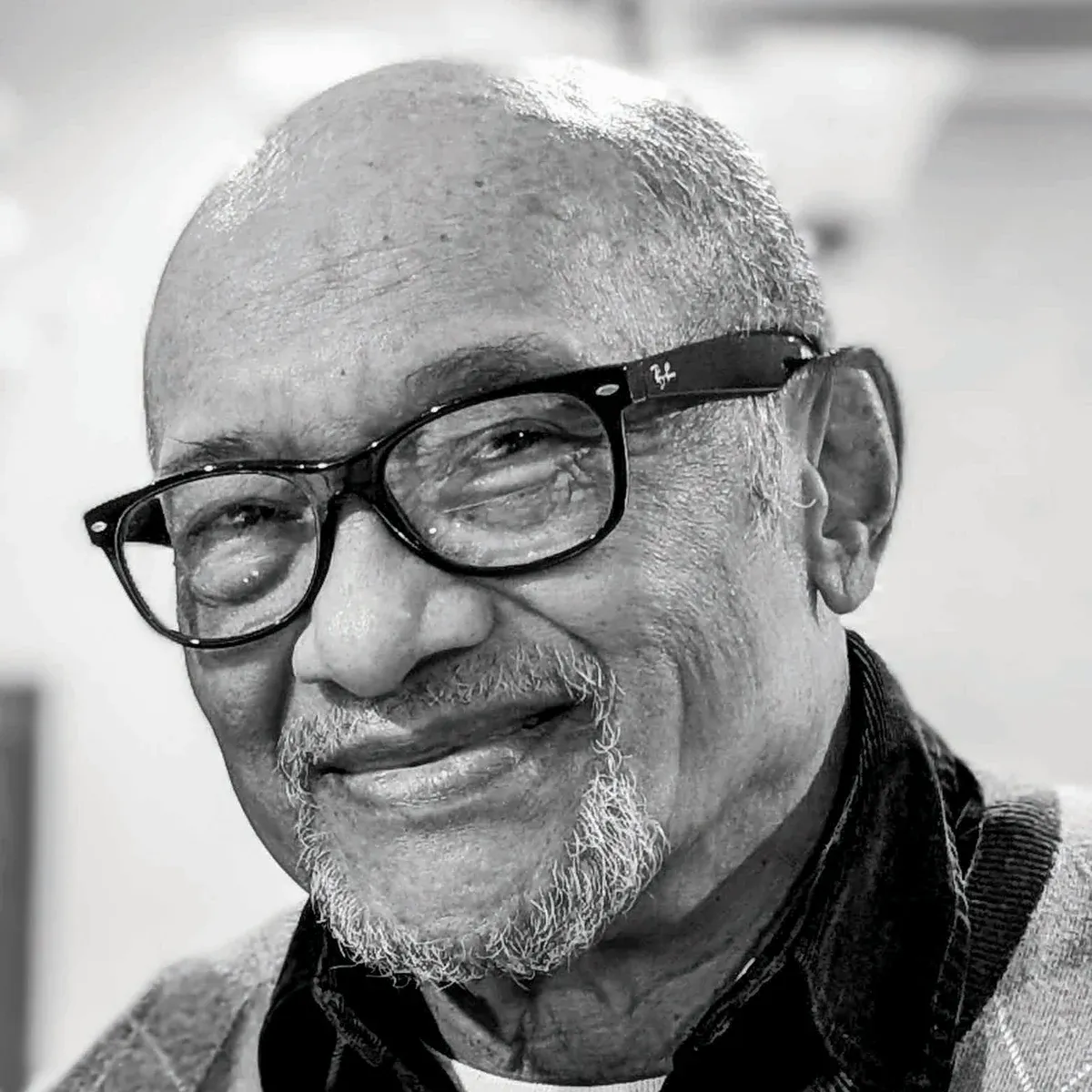
Why photography? It is a family talent, and in our blood!
Seventy years ago
Seventy years ago, my grandfather Razafindralaikinasa was a missionary who worked in the region of Tsiafaha, Andramasina and Ambalavao (P.K. 27 along Highway 7) in Madagascar. While working for the protestant Evangelical Church, he set out on horseback and always carried his plate-photograph camera with him. He was a photography fanatic, and an art lover.
The plates
My father Georges Andriananjason kept the photographic plates as treasured objects, and one day I would like to exhibit them in a specially built gallery in Madagascar. His photography helped him to make ends meet at the end of the month, and when all is said and done it helped him considerably. He was very successful in his work, and on my father's side of the family quite a few people were interested in photography, including my uncle Dr. Charles Randriananja, who was an enthusiastic politician whom everyone loved, mostly because he was a great intensive care surgeon.
At eight
My father was a topographical surveyor, who taught me the art of reading and preparing plans using boundary making tools - a complicated task but a useful one in my profession - because at the age of eight I started to work with a Retina camera that my brother Victor G. Andriananjason gave me when he left Madagascar for his studies in France. (He also represented Madagascar at the Jean Lepin Jazz Festival in Antibes.)
At 18
Time went by, and I began to take black and white photographs during my vacations and my aunt Olga taught me to develop them. It was good to learn in a family environment, but above all I was very inspired by the discovery of the materials used in a photographer's laboratory. I continued to learn on the job by consulting books about photography, and I started to get really hooked. When I was 18 years old I started to venture out by reporting stories about the Boy Scout movement, given the fact that I was both a scout and then a chief scout for five years.
School of Commerce
After much discussion and deliberation, my maternal grandfather Ratsifandrihamanana (who was the accountant for three large companies in Madagascar) advised me to study at the School of Commerce after finishing my Certificate of Secondary Education. During that time I added to my equipment, and my brother who at that time was in Germany sent me an electronic flash to help me with my interest in photography. At that time I was in the G2 class, and leader of the Photography Club at the Lycée Technique Commercial.
Two years later
Two years later, I took a course in photography at the catholic École Sacré Coeur. I continued to lead the photography club and started to take class photographs as an extracurricular activity. I continued with my other studies, which enabled me to study photography by correspondence course.
1971
In 1971 at the start of the South Madagascar revolution while changes were being made in the educational system, I saw that education itself was being neglected when they closed the University Institute of Technology. I dreamed of going to that school after I finished my Bac; but this was not to be, and I decided to take a different direction.
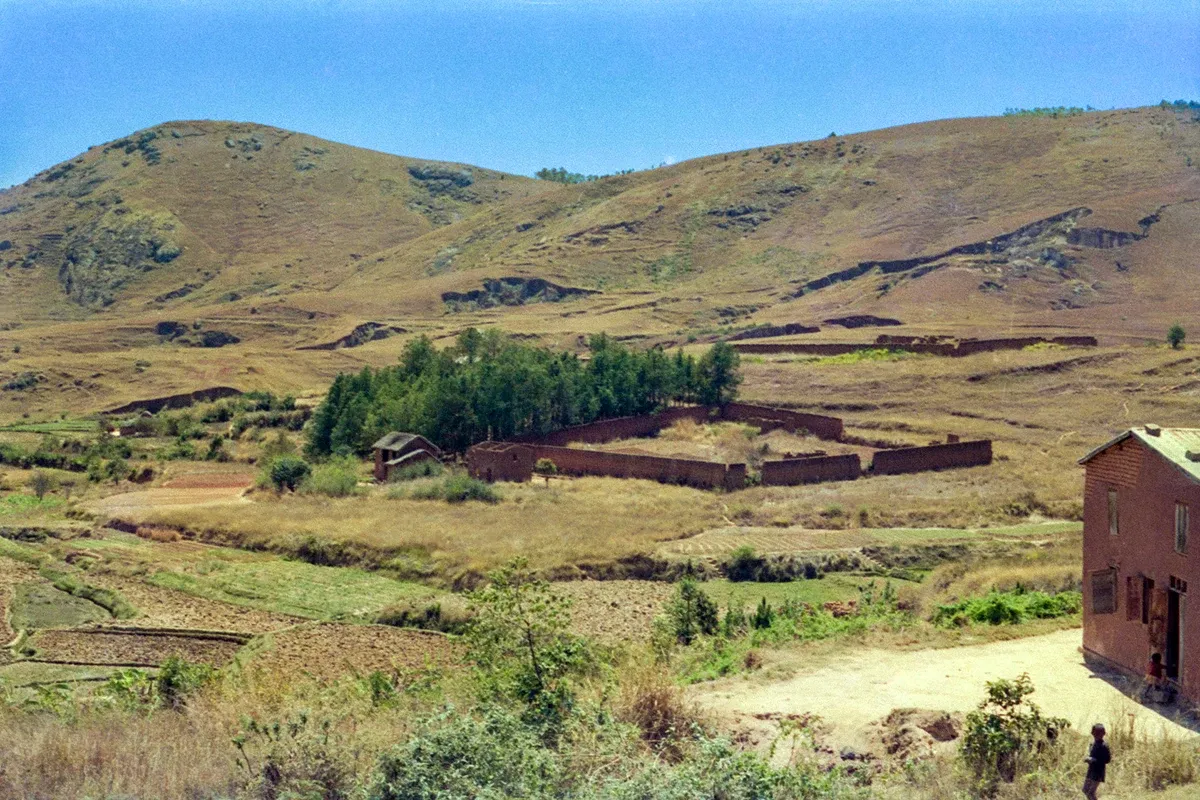
A private studio
Immediately afterwards, my Grandfather advised me to set up a private developing studio, and to continue in the direction that my maternal grandfather had already inaugurated: he had set up a photographer's studio in Andriandahifotsy to produce identity cards. Why did they come up with this idea? At that time my family did not want me to leave Madagascar. I was a revolutionary child, and they were worried that I might leave for France. But how would it be possible to find the money to study abroad - and who and what would I study with? Life began to get difficult, and I started to reach out to friends to try to make plans for the future. At this time I met my friend July Rakoto who was a jazz musician and a piano-conductor for evenings of dance and entertainment. We had many discussions and I shared with him some plans for the future. But what I really needed was a technician.
A small enlarger
At the beginning I had nothing more than my Retina camera and a flash. I found myself a small enlarger, and we contacted friends in the business who really helped us - above all the late lamented Jules Ratovondriaka of the Industrie Graphique Tananarivienne, Rajoseph from Techni-Labo, and Jean Rakotoseheno from l'Escalier du Lido.
1972
In 1972, we launched our business. We received permission from Mr. Gustave - Director of Primary Education in the National Ministry of Education to take class-photographs in the Mada region, which led to our taking photographs in southern Madagascar when we had finished photographing the schools in Tananarive.
Landis Madagascar
Orders began to flow in, because individual orders from each class could be up to thirty photos — which was no small task! Four weeks into taking the photos we were able to obtain a large developing laboratory from Landis Madagascar, with a Mr. Mildner, a German friend, and the purchase was assured by July's brother whose name was Harry Rakoto.
700 a day
We developed roughly 700 13 x 18 photographs per day. All the deliveries were quickly made, which meant that we were able to travel in Southern Madagascar to collect the takings and to document our travels in slides and color photos. In the meantime we subscribed to Revues Photo to keep up to date with developments in the world of photography. We soon began to be interested in advertising photography.
Air Madagascar
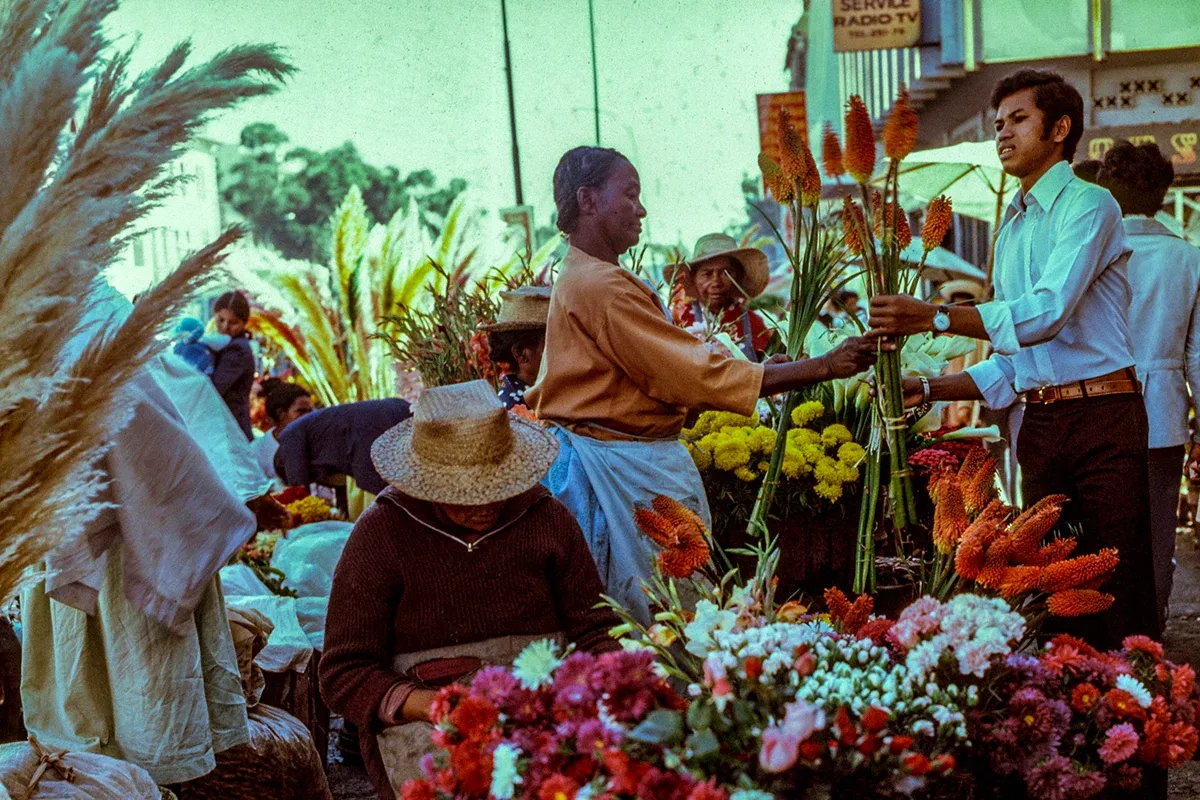
Time passed quickly, and we made a name for ourselves. July went to Mauritius to buy a medium format camera (a Hasselblad — very useful for photo editing, and above all for slide photography). We began to collect photographs for an Air Madagascar Calendar (this was around the time when Tom Andriamanoro and Baba Ramarozaka were involved in the advertising). The work began to get very complicated, and Air Madagascar's demands became more rigorous.
Paris
I was sent to Paris to obtain a number of slides, and another medium format camera (An Asahi 6x7 with a long range lens of 300mm which was useful for the production of the documents relating to the arrival of the Boeing 747), since we were in competition for the production of a book of four-color process photographs with an on-board magazine (VAHINY) and an Italian photographer.
Travel was free
Our job was to track down, conceive, and create photos of the whole of Madagascar. Travel was free! Ease of transport allowed us to produce photographs quickly, and to make the acquaintance of many big societies who were interested in the production of the book. In this connection, I'd particularly like to thank AIR MADAGASCAR in the time of Monsieur Rajaofetra, its Director General, and his General Secretary, Tata Nestor.
Publiphoto
New horizons were opening up, and we created SARL (PUBLIPHOTO). Clients were arriving, and they gave us work. There were highs and lows. Because of rivalries and other problems, the society folded, and its associates dispersed.
Société Melia
La Société Melia engaged us in a big advertising campaign for the promotion of DREAM cigarettes (including photos and calendars - namely SOAM and SECREN). And we began the production phase of our weekly job, photos of Madagascar.
Working solo
I went my own sweet way, and started to work solo. But the collection, the culture and the business had changed a lot; a small step backwards, and I worked in a publishing company as the commercial Director for two years; which allowed me to learn the printing trade and photography books, and I received a certificate in Graphic Arts by correspondence course.
Arles
Things moved along with Lucien Clergue at the Arles Festival, and another exhibition with Kodak Skema Trois in Italy, with the Pub des Tuiles. That is when I realized that we were missing something in Madagascar. It was time to put on some International Exhibitions.
First exhibitions
My first exhibition in Madagascar, "Visages et Réalisation", was followed by a large twenty-day exhibition in Paris at FIAP entitled "NY ANY AMINAY: AU PAYS DES MALGACHES" under the high patronage of the Ambassador of Madagascar in Paris, His Excellency Monsieur Henri RAHARJAONA. After Paris I presented the same exhibition with the collaboration of AIR MADAGASCAR at the Madagascar Hilton under the high patronage of His Excellency Jean BEMANANJARA, Minister of Internal Affairs in Madagascar.
Photojournal
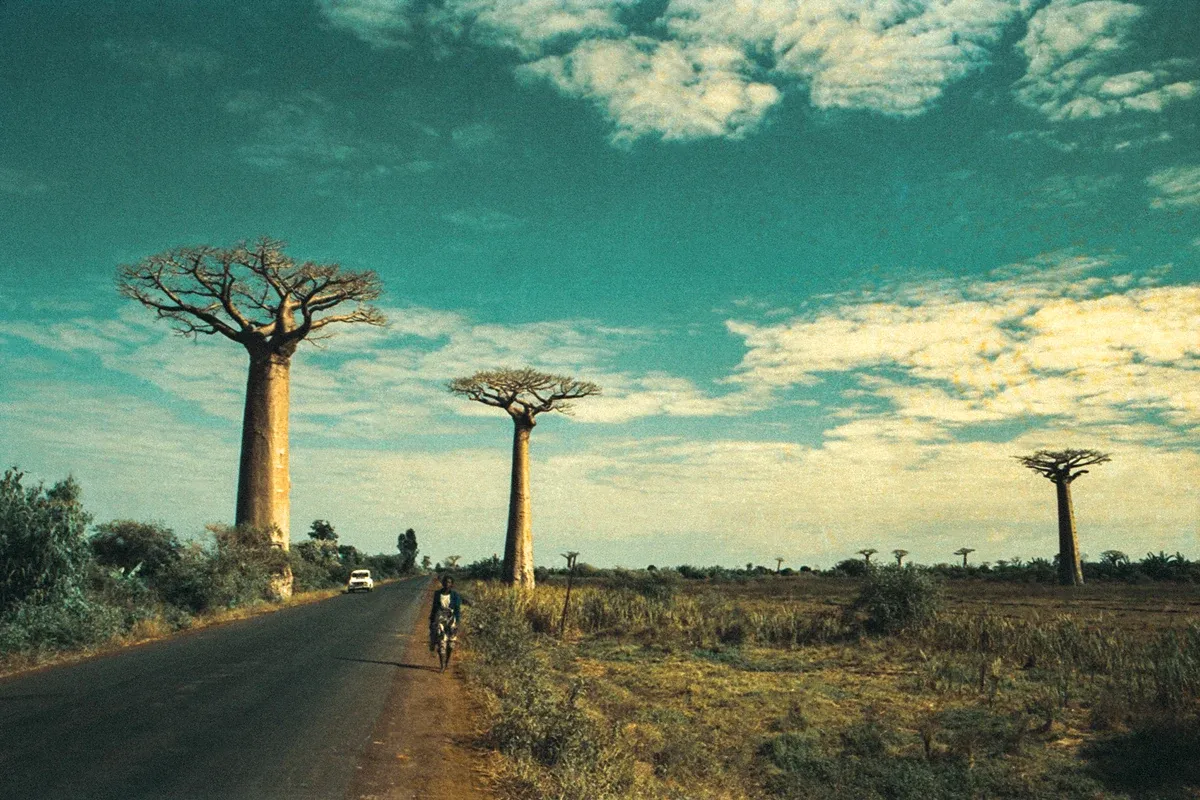
At that point, I was looking for something more stable, being finished with adventures. I edited a monthly newsletter for the Indian Ocean: PHOTOJOURNAL, and I toured around Madagascar with the aim of completing my collection of photographs on several themes. It was hard, and I want to thank my wife Merry Andriananjason and my children Nanja and Lalaina, who have always supported me and encouraged me to be patient.
New York
Now, I have come to a place where I want to make the most of what I have achieved. It is not just about memories, it is about unedited collections of slides, of black and white and of color photos. This phase of my professional life started in New York with the sale of color postcards, with diplomatic work and with sporting photography (tennis in particular, for seven years). I have held exhibitions in New York, at the United Nations for the celebration of thirty years of the Francophone Cultural Association, and exhibitions at Elmhurst Public Library on different themes relating to Madagascar.
Eco-tourism
It is time to make our Malagasy eco-tourism better known, and to create traveling exhibitions in various institutions and universities, involving collectors and students, in order to encourage knowledge of tourism opportunities in Madagascar. It is time to inform about our culture, and the sharing of our natural inheritance. After all these stages of life, I would like to thank God for His blessings.